
Scotland might not be the first place that springs to mind when planning a summer road trip, but that is part of its appeal.
Long daylight hours leave more time for exploring, the west and north coasts are scattered with beaches and a road trip can take you from a ruined castle to a white sand beach within a matter of hours.
The weather will never be entirely predictable. Even in summer, it is sensible to pack for all seasons. But with the right clothing, a flexible attitude to your route and somewhere warm and dry to sleep, the changing conditions become part of the journey.
This suggested summer road trip starts at our base in Perth, and then heads north through the Cairngorms before following Scotland’s north and west coasts towards Glencoe. It is best enjoyed over at least 10 nights, with the extra time allowing you to slow down and spend longer in the places that you enjoy most.
Our Suggested Summer Route
Loch Morlich & the Cairngorms
Leave Perth and head north towards Aviemore, where Loch Morlich sits beneath the Cairngorm mountains and is surrounded by Glenmore Forest.
Glenmore Campsite makes a great first stop. From your pitch, you can walk through the pine trees to the lochside beach, spend some time on the water or follow one of the nearby forest trails.
On a calm day, Loch Morlich is a beautiful place to paddleboard. Conditions can change quickly, though, so always check the weather before heading out. You do not need to bring all the equipment with you, either. The Watersports Centre on the beach has paddleboards, kayaks and other equipment available for hire.
There is plenty nearby to justify staying for a second night. You could walk around Loch an Eilein, try activities such as quad trekking, ranger led walks or clay shooting at Rothiemurchus Estate or simply give yourself the full day to explore and relax.

Inverness & Culloden
From Aviemore, continue north to Inverness.
A walk beside the River Ness is an easy way to explore the city, while Inverness Museum and Art Gallery offers an introduction to the history and culture of the Highlands.
A few miles outside the city, Culloden Battlefield tells a more difficult story. The visitor centre and battlefield walk provide context to the final Jacobite rising and the events that changed Highland life for generations. It’s a poignant stop, but one that provides valuable context for Scotlands’s history and the lasting impact of the Jacobite rising on Highland communities.
In the evening, Inverness has plenty of independent restaurants, traditional pubs and live music. It also gives you a chance to restock before travelling into the more remote stretches of the north coast.
John O’Groats and Dunnet Head
Follow the coast north through Caithness towards John O’Groats.
The famous signpost is worth a photograph, but do not stop there. Walk towards Duncansby Head for views of its sea stacks, or continue west to Dunnet Head, the northernmost point of mainland Britain.

Dunnet Head is an RSPB nature reserve, with high sea cliffs and views towards Orkney on a clear day. Puffins and other seabirds can be seen during the breeding season, although wildlife sightings can never be guaranteed.
For your camping pitch, head a little further along the coast to The Crofters Snug. This is a small, dog friendly campsite offering just five touring pitches. You will feel like you have the place to yourselves as you drink in the dramatic sea views.
We recommend booking ahead for all campsite stays in the summer months, especially around the NC500, which is very popular for travellers at this time of year. As part of our itinerary planning service, we can recommend suitable campsites and make the bookings for you. Just get in touch with the team.
Durness & Smoo Cave
The road west towards Durness is one of the most memorable parts of the journey. The landscape becomes increasingly open and remote, with sea lochs, rocky hills and beaches appearing around the bends. It is not a road to rush.
Sango Sands Oasis campsite sits above the beach and makes a convenient base for exploring Durness and the surrounding coastline. Pitches for those that don’t require electrical hook-up are on a first come, first serve basis, so make sure you get there with plenty of time to pick a great spot.
The beaches below can be exposed to strong waves, but in calm conditions they are lovely places for a picnic or time beside the water.
You can visit Smoo Cave while you are here, a spectacular sea cave set into the limestone cliffs. The cave can be explored by path from the car park on the cliffs, or by boat with one of their guided tours. The cave boasts one of the largest entrances to any sea cave in Britain at 50 feet high! If you’re hungry after your tour, Cheese N’Toasted food van parked in the car park comes highly recommended.
Clachtoll Beach & the Assynt Coast
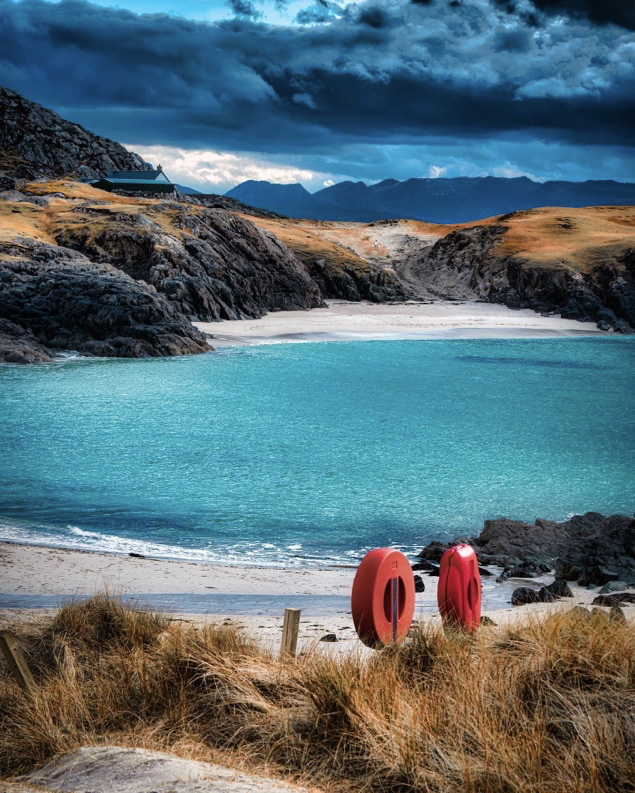
Clachtoll’s pale sand, clear water and mountain backdrop make it one of the most memorable beaches on the route.
Clachtoll Beach Campsite is one of our favourite places to pitch up in the Land Rover. It’s a quiet, award-winning campsite, situated right in front of the beach.
Clachtoll is also part of the North West Highlands Snorkel Trail. In calm waters the sheltered bay will suit beginners, while the rocky edges contain kelp, shellfish and juvenile fish. Always check the conditions, use suitable cold-water equipment and never snorkel alone.
You can easily spend a couple of nights in this beautiful location, snorkelling, paddleboarding, fishing or just taking in the beautiful sights.
Ullapool & The Summer Isles
Once you feel ready to tear yourself away, head along the road to Ullapool. Here you can visit the Corrieshalloch Gorge or the Ullapool Museum.
For those of you hoping to see marine wildlife, boat tours operate from here out to the Summer Isles, with very well-informed guides on board to give you the history of the area and Isles.
Ullapool is also a great place to enjoy locally caught seafood or wood-fired pizza. Two of our favourite places to eat are located here, the Seafood Shack and Oak and Grain Pizzeria.
With full bellies you can retire to your rooftop tent, pitched up in Broomfield Holiday Park. A quiet campsite set on the banks of Lochbroom, within walking distance of the village.
Plockton & Applecross
The journey from Ullapool towards Applecross and Plockton deserves time.
The coastal road through Torridon and Shieldaig is one of the finest drives in Scotland. Stop when something catches your attention rather than concentrating only on reaching the next named destination.
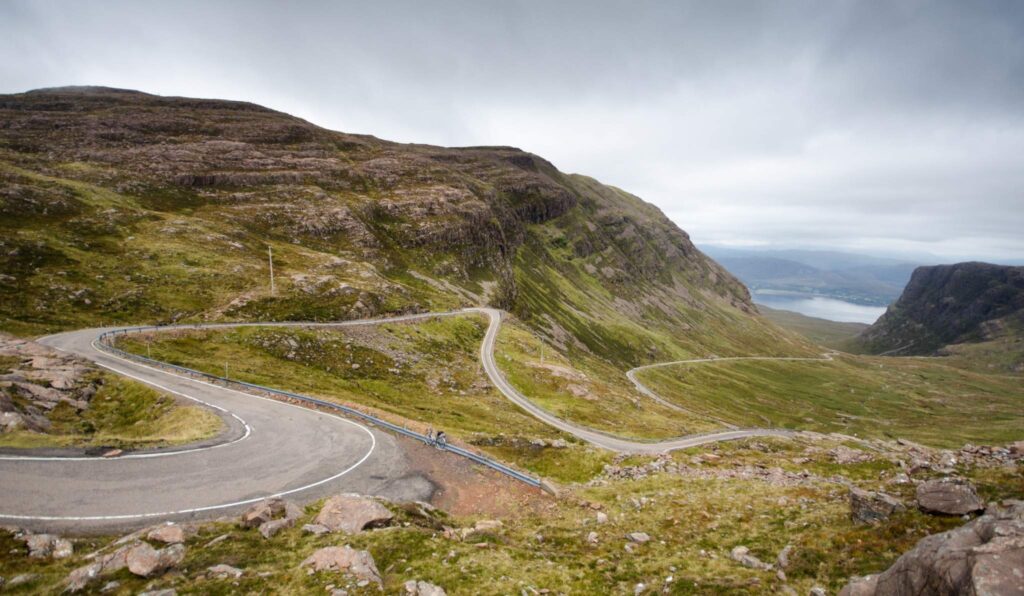
The Bealach na Bà mountain road into Applecross is steep, narrow and unsuitable in poor conditions or for nervous drivers. In clear conditions, the views from the top are far-reaching and breathtaking. There is an easier coastal approach, and there is no shame in choosing it. The purpose of the trip is to enjoy the landscape, not to prove anything.
Once in Applecross, stop for lunch at the Applecross Inn, overlooking the bay. There is also a campsite here, if you decide to linger for a little while longer.
From Applecross, continue towards Plockton, a village of white cottages set around a sheltered bay. Its calm waters make it a popular place for kayaking and paddleboarding when conditions permit.
Glencoe & Glen Etive
For the final stage, travel south towards Glencoe.
The surrounding mountains are among Scotland’s most recognisable, but it is still possible to find quieter moments away from the main viewpoints. For a quieter detour, follow the single-track road into Glen Etive, allowing plenty of of time for passing places, walkers and wildlife.
Red Squirrel campsite provides a simple woodland base close to Glencoe village. For a final meal, pop into the Clachaig Inn or pick up something fresh to cook outside before your last night beneath the rooftop tent.
From Glencoe, it is approximately a two-hour drive back to our Perth base, although summer traffic can add to the journey.
Make the Journey Your Own
This route is only a starting point.
You do not have to visit every place, and adding more stops does not always make a better holiday. Scotland is often best experienced by choosing fewer locations, staying for longer and leaving enough space for an unexpected beach, café, walk or view along the way.
Our self-drive road trips combine a Land Rover Defender with rooftop camping equipment and a route shaped around the Scotland you want to experience. Explore our road-trip itineraries or speak to us about creating a bespoke summer journey.