
Driving on the Left in Scotland: What You Need to Know
If you’re visiting Scotland from the USA, Canada or mainland Europe, driving on the left might be one of the things you’re a little nervous about. It’s a perfectly reasonable concern, particularly if you’re planning to spend a week exploring the Highlands in a hire car.
The good news is that most drivers get used to it fairly quickly. There are a few things worth knowing before you set off, though, especially when you leave the main roads behind.
We’ve put together some practical advice to help you feel more comfortable behind the wheel.
Which side of the road do you drive on in Scotland?
In Scotland, we drive on the left-hand side of the road, just like everywhere else in the UK. The steering wheel is on the right-hand side of the car, and you overtake on the right.
If you’re used to driving on the opposite side, the first few junctions and roundabouts can feel a little strange.
One thing worth remembering is that it’s often when the road is quiet that you need to pay particular attention. Pulling out of a petrol station, leaving a car park or turning onto an empty road are all moments when it’s easy to slip back into old habits.
Our advice? Take your time, particularly during the first hour or two, and remind yourself to keep left whenever you start driving again.

Getting used to roundabouts
Roundabouts can take a little getting used to if you’re accustomed to driving on the right.
In Scotland, traffic moves clockwise around a roundabout, and you give way to traffic approaching from your right.
Pay attention to road markings and signs as you approach, choose your lane early and don’t feel pressured by other drivers. If you’re unsure which exit to take, it’s better to continue around the roundabout safely than make a last-minute turn.
You’ll encounter plenty of roundabouts on your journey north from Edinburgh or Glasgow, so there’s a good chance you’ll have got the hang of them before reaching the Highlands.
Driving on single-track roads in the Highlands
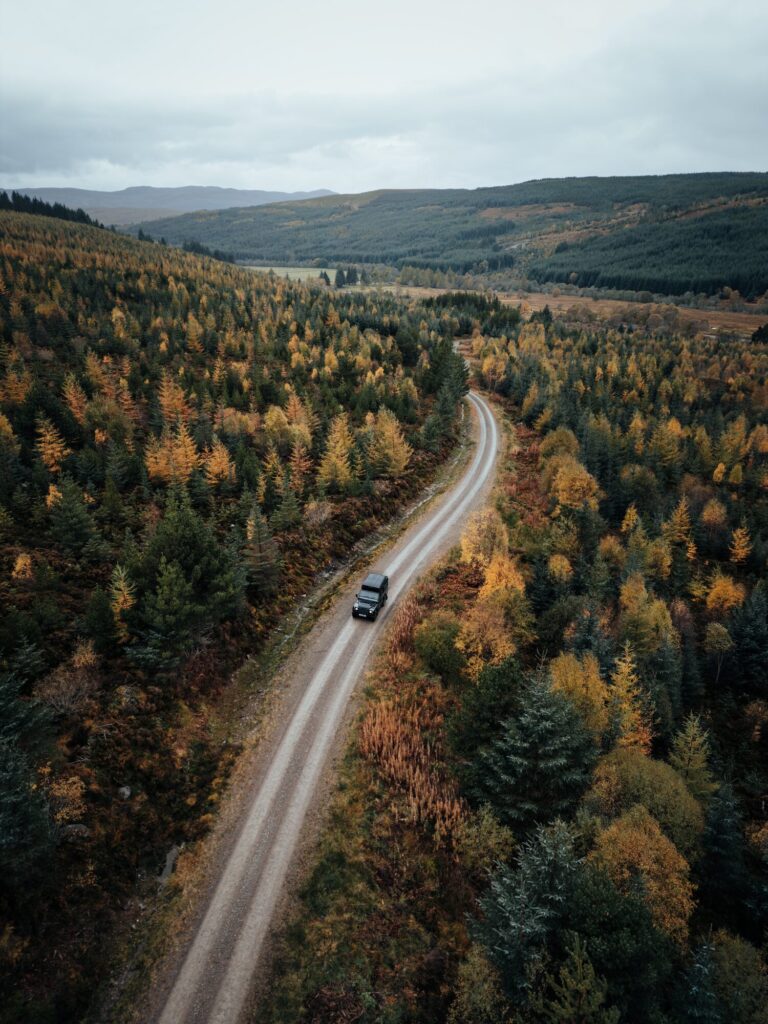
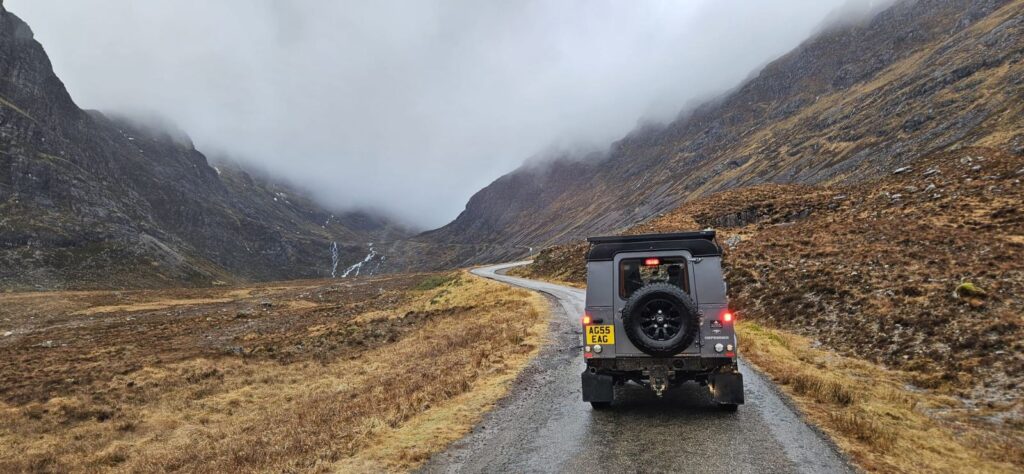
Once you get into the more remote parts of Scotland, you’ll probably encounter single-track roads.
These are roads that are only wide enough for one vehicle, with passing places at intervals to allow traffic travelling in opposite directions to get past each other.
They’re common across the Highlands and islands, particularly on some of the quieter roads around Skye, the west coast and the North Coast 500.
There’s a simple etiquette to using them:
- If a car is approaching, pull into a passing place on your left, or wait opposite one on your right.
- If the nearest passing place is behind you, you may need to reverse carefully to let another vehicle through.
- If there’s a vehicle behind you travelling faster, use a passing place on your left to let it overtake.
- Never park in a passing place to take photographs or admire the view.
You might also find yourself sharing the road with sheep, cyclists, walkers or the occasional Highland cow.
Take your time, look well ahead and don’t assume that a quiet road means there won’t be something around the next bend.

Are Scottish roads difficult to drive?
Most of Scotland’s main roads are straightforward to navigate. The A9 north from Perth, for example, is a major route through the Highlands, with a mixture of single and dual carriageway sections.
The smaller roads are a different story. Some are narrow, winding and have very few opportunities to overtake. You’ll also find stretches without street lighting, particularly in rural areas.
One thing we always tell guests is not to underestimate driving times in Scotland.
A journey of 100 miles might take considerably longer than you’re used to, especially if you’re following the coast, crossing mountain passes or stopping regularly along the way.
And you’ll want to stop. That’s half the point of coming here.
Give yourself plenty of time, avoid trying to cover too much ground in one day and remember that you don’t need to drive at the speed limit if the road conditions don’t allow it.
Should you hire an automatic car in Scotland?
If you’re used to driving on the right, we’d recommend considering an automatic vehicle, particularly if you’re not comfortable driving a manual.
In a UK manual car, you’ll change gears with your left hand. That’s another adjustment to make while getting used to driving on the opposite side of the road.
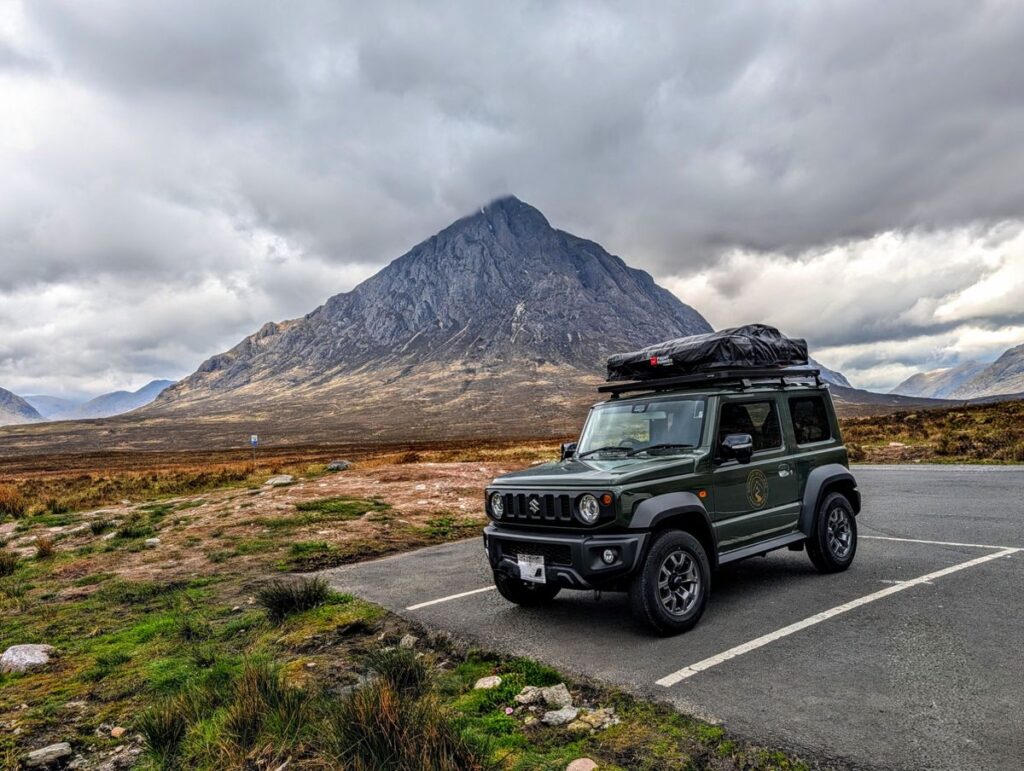
Our New Land Rover Defender 110s are automatic, which takes one thing off your mind. They’re also comfortable for longer journeys and well suited to exploring Scotland’s main roads and quieter Highland routes. We also have our Suzuki Jimny if your looking for something a little smaller.
If you prefer a manual, our Classic Defenders are another option. Just bear in mind that driving one is a slightly different experience from driving a modern automatic.
You can explore our 4×4 hire options before deciding which vehicle suits your trip.
A few things worth knowing before you set off
There are a handful of other things that visitors sometimes overlook.
Speed limits are in miles per hour, not kilometres. You’ll see speed limits displayed in mph throughout Scotland. Always follow the posted signs, including lower limits through towns and villages.
Watch out for changing weather. Heavy rain, mist and strong winds can make driving more difficult, particularly on exposed Highland roads. In winter, ice and snow can also affect routes, so check conditions before travelling.
Don’t drive tired. If you’ve just arrived on a long-haul flight, consider allowing time to rest before setting off on a long drive. Driving on unfamiliar roads takes concentration.
Plan your fuel stops. Petrol stations can be further apart in remote areas. It’s worth filling up before heading into the quieter parts of the Highlands.
Don’t rely entirely on your sat nav. Some suggested shortcuts aren’t particularly suitable for larger vehicles, and mobile signal can be patchy. Downloading offline maps before you leave is sensible.
What happens when you collect your car from Nomadic Scotland?
We know that for some guests, collecting a car is their first experience of driving in Scotland.
That’s why we take time to go through the vehicle with you at our base in Perth before you head off.
We’ll explain the controls, answer any questions you have and make sure you’re comfortable with the vehicle and any camping equipment you’ve hired.
We’ll also talk through your route, including the types of roads you’re likely to encounter and anything worth knowing about the journey ahead.
And if you have questions once you’re away, we’re available on WhatsApp throughout your trip.
Enjoy the drive, don’t rush it
Driving on the left might feel unfamiliar at first, but it shouldn’t put you off exploring Scotland by car.
Some of our favourite roads are the smaller ones, where the scenery changes around every corner and there’s always somewhere worth pulling over for a walk or a coffee.
Take your time, be considerate of other road users and give yourself room to enjoy the journey.
If you’re planning a Scottish road trip, have a look at our Scotland Road Trip Guide for more advice on routes, places to visit and planning your time in the Highlands.
And if you’d like some help putting together your own trip, get in touch with the Nomadic Scotland team. We’ll happily help you work out a route that suits you.